Guide: Value and appraisal
How much is pre-Columbian pottery worth?
How much is pre-Columbian pottery worth? There is no single answer, because two jars that look alike can be a modern reproduction and a documented work with a museum history. The worth of a piece follows six things: who made it and when, what it shows, how complete and original it is, its size and quality, its history, and whether it has been tested. This guide explains each one, so you know what to photograph and what to ask.
Why there is no single answer
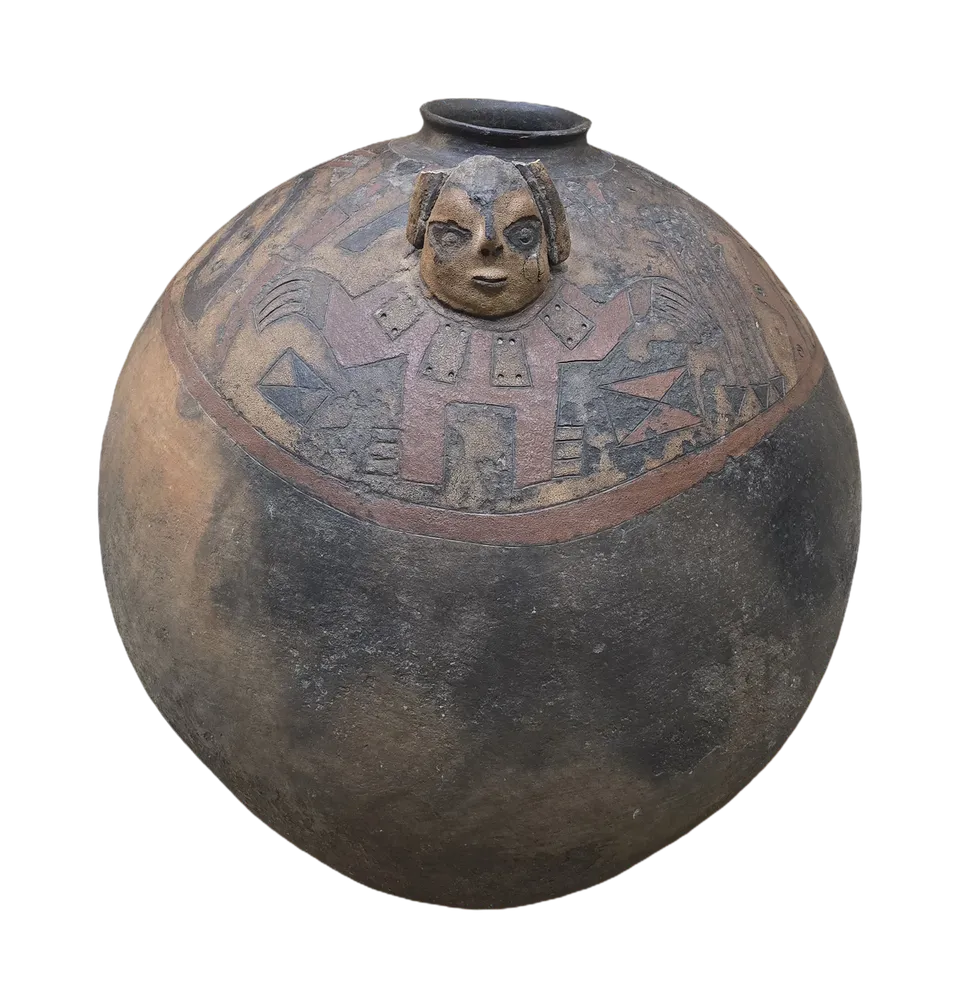
Pre-Columbian pottery covers about three thousand years and thousands of kilometres, from the Mexican coast to the south of Peru. Some kinds were made in great numbers and survive in large quantities. Others were made for a few important burials and survive in handfuls. Collectors treat them as different markets.
A dealer or an auction house therefore prices the piece in front of it, never the category. A red Colima dog and a painted Maya cylinder vase are both pre-Columbian pottery, and they have little else in common as far as worth is concerned. The same holds inside one culture: a plain everyday bowl and a finely painted vessel from the same people are far apart.
The six things that decide the worth
An expert looks at the same six things in the same order, and so does a buyer.
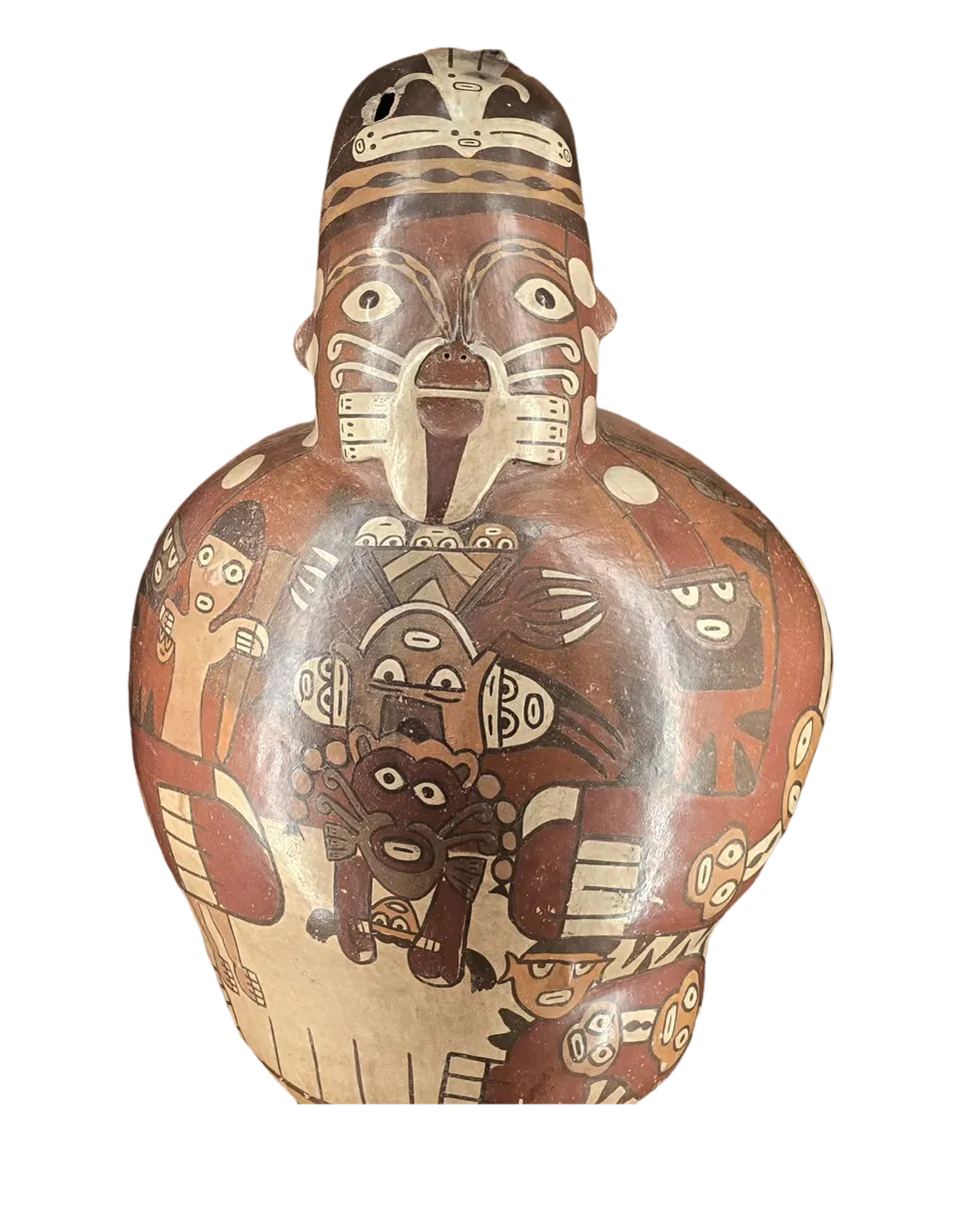
- Culture and period. Placing a piece in a culture and a phase is the first thing settled. Well-known and sought-after styles, such as Moche, Nazca, Maya painted pottery and the red-ware of Colima, draw more collectors than a plain vessel of an undated type.
- Subject and artistry. A modelled portrait, a narrative painting, a rare animal or a mythical being carries more than a simple jar. Quality of painting and modelling matters as much as the subject.
- Condition and originality. A complete piece with its original surface is worth more than one that has been broken, repaired or repainted. A repair is not a flaw in itself, but it has to be disclosed, and invented missing parts or heavy repainting lower the worth.
- Size and presence. Large, well-proportioned pieces that stand out in a room usually outrank small ones of the same kind.
- History. A piece with a documented history, such as an earlier collection, an earlier sale, a museum exhibition, a publication or a laboratory test, is worth more than the same piece with none. What provenance is explains how that is judged.
- Testing. A laboratory test of the fired clay can support its age. It does not say which culture made the piece or how good it is, so it adds to the other five and replaces none of them.
Reproductions and later copies
Many jars sold as ancient were made recently, some as honest souvenirs and some meant to deceive. A piece that is not ancient still has decorative value, but it has none as a collector's object, which is why authenticity comes before everything else on the list. Is my pre-Columbian pottery real? shows what experts look at.
How a buyer or an appraiser prices a piece
The method is comparison. The buyer finds pieces of the same culture, kind and quality that actually sold, at auction or through dealers, and adjusts for the condition, size and history of the piece in front of them. An asking price is not a sale, and an auction estimate is not a result, so only completed sales count.
That is why a photograph alone can give a first answer, and why a close look can change it. How we value describes how an offer from us is reached, and pre-Columbian art appraisal explains what a formal appraisal adds.
What to send to get a useful answer
Clear photographs and what you know of the piece are enough for a first opinion.
- Photographs from the front, back, both sides and above, in daylight against a plain background.
- A close photograph of the base, the inside of the rim and any marks, numbers or labels.
- A close photograph of every chip, crack, repair or area of new paint.
- A coin or a ruler beside the piece, so the size can be seen.
- What you know of its history: who owned it, where it was bought, any receipt, label or old catalogue number, and anything written about it.
Ask us about a piece
We buy pre-Columbian pottery and look at every piece on its own terms. If you send photographs and what you know, you hear back within two working days with what we think the piece is and, where we can, an offer in writing. There is no fee and no obligation. Tell us what you have or see what we buy.
Cite this guide: Precolumbian.com, “How much is pre-Columbian pottery worth?”, 2026, https://precolumbian.com/guides/how-much-is-pre-columbian-pottery-worth.html
Common questions
Is old Mexican pottery worth anything?
Some of it is. Genuine pre-Columbian pieces from well-known cultures have a collector market, while everyday or later pieces often have modest worth. The only way to know is for someone who works in the field to look at clear photographs of the piece.
Does a piece need to be perfect to be worth something?
No. Ancient pottery is often broken and repaired. Complete pieces with their original surface are worth more, but a rare or well-painted piece with disclosed repairs can still be valuable. Heavy repainting or invented missing parts lower the worth.
Do I need a laboratory test before I sell?
Not to ask us. A test of the fired clay can support a piece's age, but it costs money and does not tell which culture made the piece or how good it is. Send photographs first and we say whether a test would help.
Are Mayan, Aztec and Inca pieces worth more than other pottery?
Fame helps but does not decide. A fine piece from a lesser-known culture can outrank a plain piece from a famous one. Quality, condition, subject and history count for more than the name on the label.
How long does it take to find out what a piece is worth?
From clear photographs we reply within two working days with what we think the piece is and, where we can, an offer in writing. A formal appraisal for insurance or an estate takes longer and is a separate service.
Keep reading
How to tell if pre-Columbian pottery is real
The evidence experts compare, the common copies and what a clay-age test actually establishes.
Pre-Columbian art appraisal: what you need and why
A formal appraisal, a first opinion and a buyer's offer answer different questions.
What is provenance in art? How to trace a piece's history
What an object's documented history can tell you, and how to follow the evidence.
How to sell pre-Columbian art: choosing a route
Compare the selling routes, prepare a useful enquiry and understand what an offer actually promises.
Who buys pre-Columbian artifacts? Buyers and intermediaries
Find the right kind of buyer and distinguish a purchase offer from a plan to find someone else.
Have something to sell?
Send us photographs and whatever you know. You hear back within two working days.
Or write straight to info@precolumbian.com