Materials and cultures
What we buy
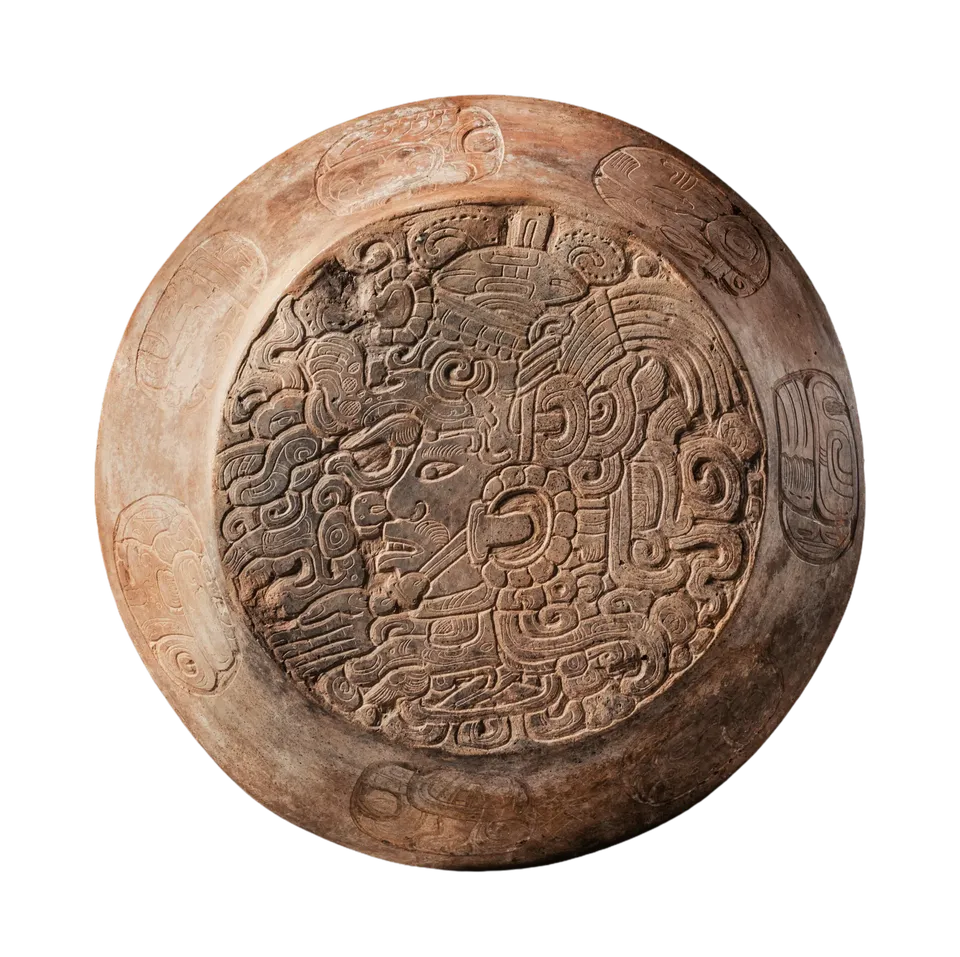
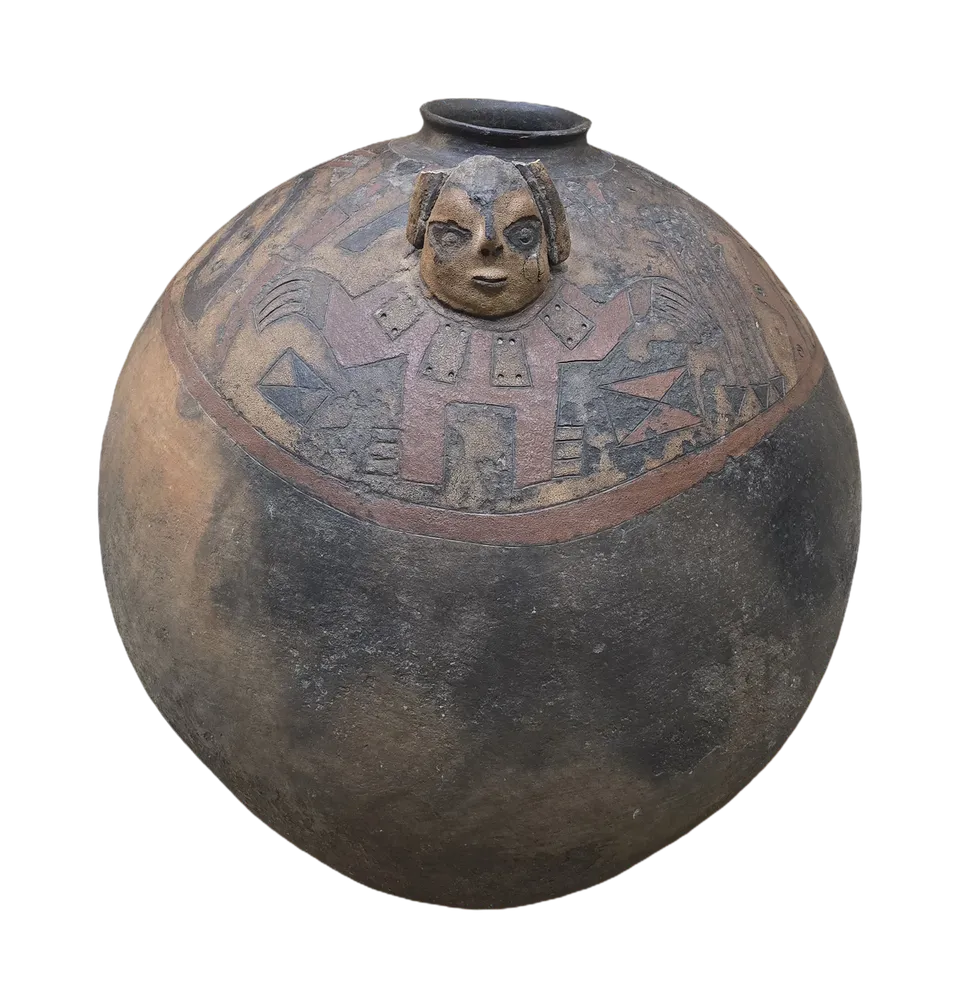
Pre-Columbian art from the Americas, made before European contact: single pieces and whole collections. The pieces pictured are from our own collection, each with a documented history: the standard we look for in what we buy.
Ceramics
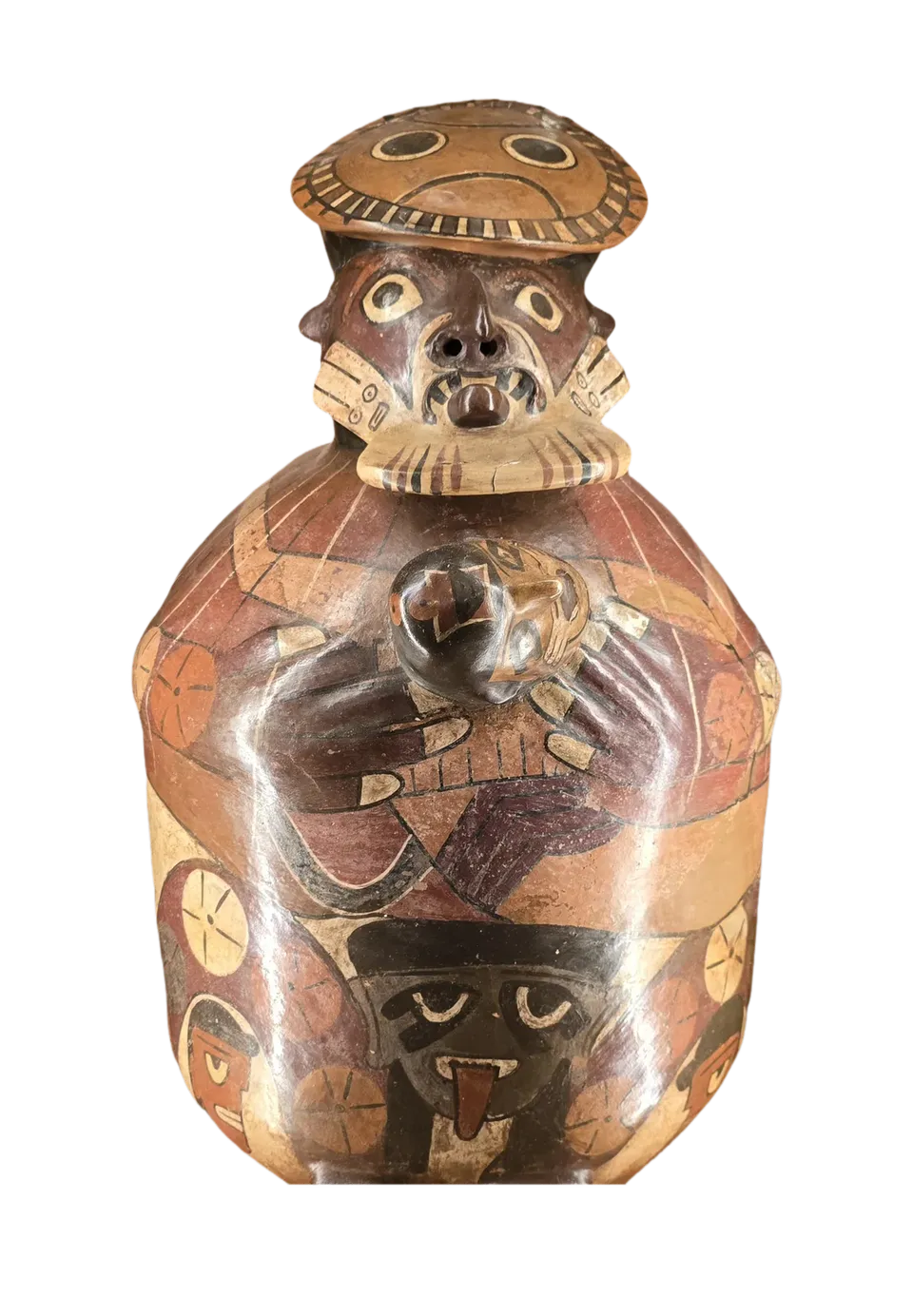
Painted and modelled pottery, from vessels and figurines to whistles and effigies: the polychrome vases of the Maya, the portrait vessels of the Moche, the dogs of Colima.
What we look for
Fine painting and modelling, portrait and story scenes, complete pieces, and groups that stayed together in one old collection.
Stone and jade
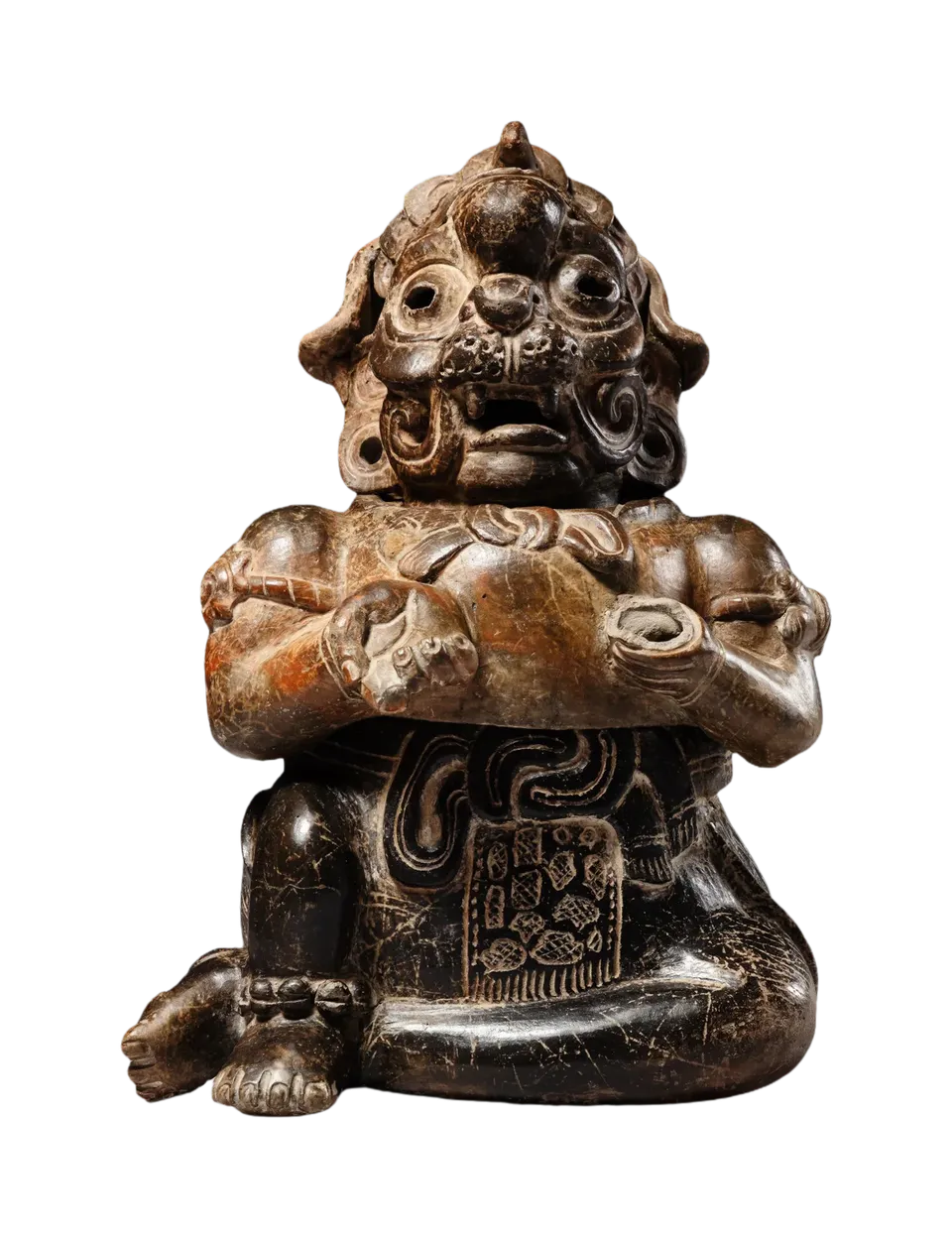
Carved jade, greenstone and other hard stone: masks, pectorals, axe-heads and figures, and larger sculpture and ceremonial grinding tables.
What we look for
Strong carving, good colour and polish, and pieces with a record of earlier owners.
Gold and metalwork
Cast and hammered gold, tumbaga and copper: pendants, ear and lip ornaments, plaques and necklaces from Colombia, Panama, Costa Rica, Peru and Mexico.
What we look for
Complete pieces with their original surface, and groups of beads or ornaments that belong together.
Shell
Worked and carved shell, above all Spondylus: ornaments, pendants, inlaid pieces, necklaces and trumpets.
What we look for
Bright colour, fine carving, and inlay with its stones still in place.
Pieces many collections hold
A collection does not have to look like a museum's. These are kinds of piece that many collections hold, and each is as welcome as a rarer one.
Colima dogs and animals
Glossy red dogs and other animal figures from the tombs of West Mexico.
Nayarit and Jalisco figures
Standing and seated figures with painted faces, from the shaft tombs of West Mexico.
Nazca painted vessels
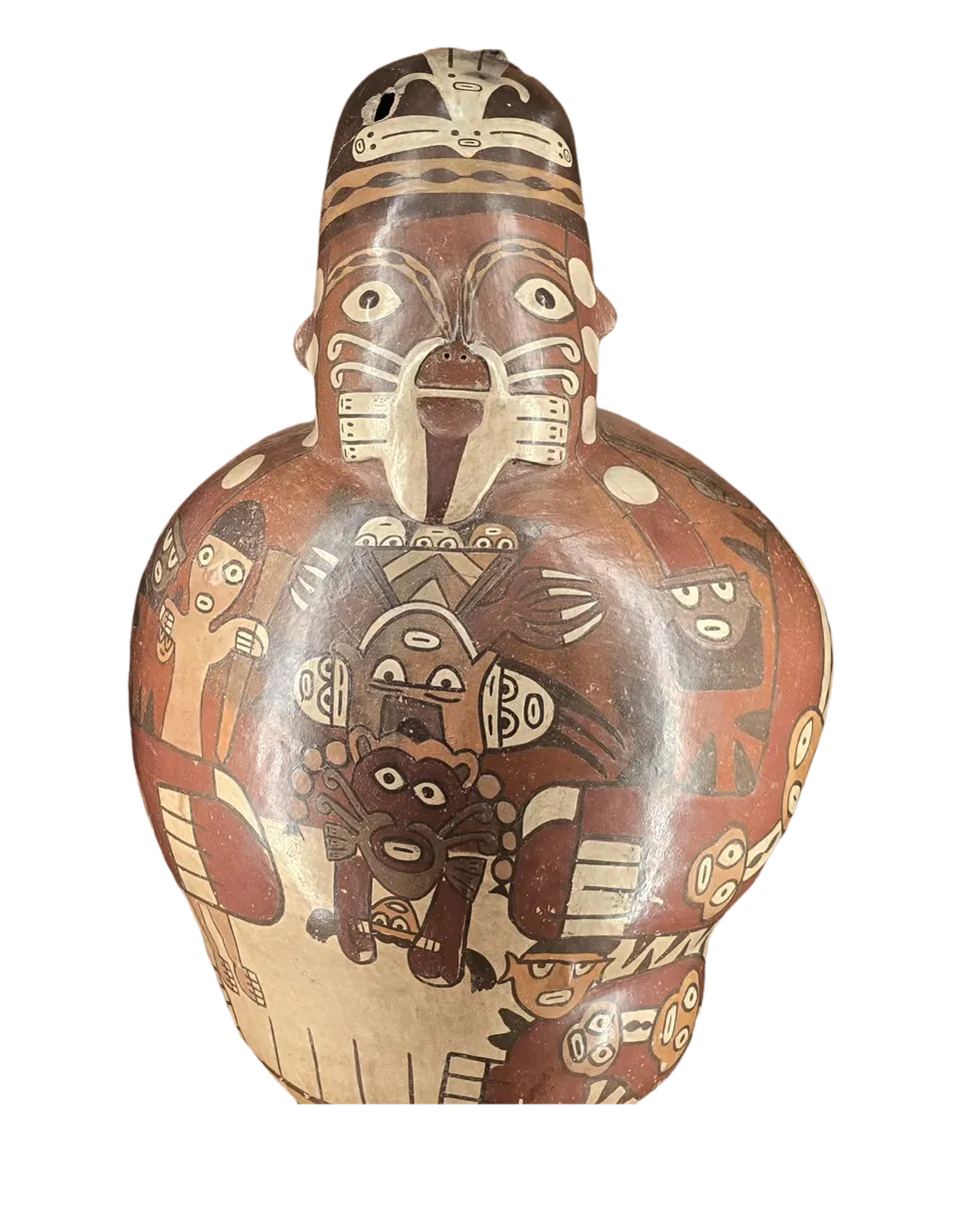
Bottles, bowls and beakers painted in many colours on the south coast of Peru.
Chimu blackware
Polished black vessels from the north coast of Peru.
However you know it
People describe what they hold in many ways: Mayan or Aztec pottery, Inca or Peruvian artifacts, figurines, tomb figures, antiquities, or jade, gold and shell brought back from a trip to Mexico, Central America or the Andes. If it came from the Americas and may be older than European contact, it is what we buy. Write to us, and we say plainly what it is and whether we can take it.
Not sure yours qualifies?
You do not have to know. These are the cases people hesitate over, and each is welcome to write.
- Only part of a collection. Tell us which pieces you would like to keep and which you are ready to sell, and send photographs of those first.
- Pieces you inherited. You do not need to know what they are. A few photographs and whatever the family remembers are enough.
- A piece you cannot identify. Write what you were told, even a label or a family story, and say you are not sure. We tell you what we see.
- Broken, repaired or restored. It does not rule a piece out. Photograph the damage and any repair you know of.
- A mixed group. Send the pre-Columbian pieces first and mention the rest. We say plainly which we can take.
- A piece we cannot take. We say so plainly, with the reason. It costs you nothing to ask.
An offer comes only after we have seen what you have, and you decide whether to accept it.
The cultures we know best
These are where we begin. Dates are approximate; chronologies differ by region and author. The map of the cultures shows where each one lived.
- Olmec
- Gulf Coast of Mexico (Veracruz and Tabasco) · c. 1200-400 BCE
- Maya
- Southern Mexico, Guatemala, Belize, Honduras and El Salvador · Classic period, c. 250-900 CE
- Teotihuacan
- Central Mexico · c. 100 BCE-550 CE
- Zapotec
- Oaxaca, Mexico · c. 500 BCE-800 CE
- Mixtec
- Oaxaca and Puebla, Mexico · c. 900-1521 CE
- Aztec (Mexica)
- Central Mexico · c. 1300-1521 CE
- Veracruz
- Gulf Coast of Mexico · c. 300-900 CE
- Colima
- West Mexico · c. 100 BCE-300 CE
- Nayarit
- West Mexico · c. 100 BCE-300 CE
- Jalisco
- West Mexico · c. 300 BCE-300 CE
- Chupicuaro
- Guanajuato, Mexico · c. 400 BCE-200 CE
- Moche
- North coast of Peru · c. 100-800 CE
- Nazca
- South coast of Peru · c. 100 BCE-800 CE
- Chimu
- North coast of Peru · c. 900-1470 CE
- Inca
- Andes of Peru, Bolivia, Ecuador, Chile and Argentina · c. 1400-1533 CE
- Chancay
- Central coast of Peru · c. 1000-1470 CE
- Wari
- Highlands of Peru · c. 600-1000 CE
- Tiwanaku
- Lake Titicaca basin, Bolivia and Peru · c. 500-1000 CE
- Paracas
- South coast of Peru · c. 800-100 BCE
- Chavin
- Highlands and coast of Peru · c. 900-200 BCE
- Vicus
- Piura, northern Peru · c. 100 BCE-300 CE
- Chiripa
- Lake Titicaca basin, Bolivia · c. 1500 BCE-100 CE
- Valdivia
- Coast of Ecuador · c. 3500-1800 BCE
- Jama-Coaque
- Coast of Ecuador · c. 350 BCE-400 CE
- Tairona
- Caribbean coast of Colombia · c. 900-1600 CE
- Quimbaya
- Cauca valley, Colombia · c. 500 BCE-1600 CE
- Taino
- Greater Antilles · c. 1200-1500 CE
Something not listed
Write to us anyway. The list is where we begin, not where we stop, and we will tell you plainly whether we can take what you have. Andean textiles, obsidian, wood and bone often sit in a collection beside the ceramics; send photographs of those too.
Not sure what you hold? What is my piece? shows the kinds that turn up most often.
Have something to sell?
Send us photographs and whatever you know. You hear back within two working days.
Or write straight to info@precolumbian.com