Guide: Mexico and the Maya region
Mixtec Art: Gold Jewelry, Codices and Pottery
Mixtec art is the art of the Mixtec peoples of Oaxaca, Puebla and Guerrero in southern Mexico, especially the goldwork, painted books and polychrome pottery of the centuries between about 1200 and 1521. The Mixtec call themselves Ñuu Savi, often translated as people of the rain. Their artists are known for cast gold ornaments, screenfold manuscripts painted with genealogies and histories, and fine turquoise and shell mosaic. This guide connects those forms and separates Mixtec work from Zapotec, Aztec and later copies.
- TilantongoA Mixtec highland kingdom, home of Lord 8 Deer
- AchiutlaAn important Mixtec religious centre in the Mixteca Alta
- YanhuitlánA Mixtec town of the northern Mixteca
- CoixtlahuacaA multi-ethnic kingdom of the northern Mixteca Alta, home to Chocho and Mixtec speakers
- TututepecThe Mixtec capital on the coast of Oaxaca
- Region
- La Mixteca: western Oaxaca, southern Puebla and eastern Guerrero
- Dates
- Art of the Postclassic kingdoms mainly about 1200-1521 CE; Mixtec communities are older
- Made of
- Gold, silver, greenstone, turquoise, shell, clay and painted hide
- Known for
- Cast gold jewelry, screenfold codices, polychrome pottery and mosaic
- Writing
- Pictorial manuscripts with genealogies, histories and place signs
- Goldwork
- Lost-wax casting, sheet gold, false filigree and gold-silver-copper alloys
- How to recognise
- Codex-style figures and scrolls, fine gold ornaments and polychrome vessels; labels need checking
Who were the Mixtec, and where did they live?
The Mixtec live in La Mixteca, a highland and coastal region that runs through western Oaxaca and into neighbouring Puebla and Guerrero. It is usually divided into the Mixteca Alta, the Mixteca Baja and the Mixteca Costa. The Mixtec languages belong to the Otomanguean family, and the people call themselves Ñuu Savi, often translated as people of the rain. The name Mixtec comes from Nahuatl and is commonly explained as cloud people.
Mixtec kingdoms were never a single state. They competed and allied with one another and with Zapotec kingdoms in the valley of Oaxaca. Their surviving histories name places such as Tilantongo, Achiutla, Yanhuitlán, Tlaxiaco and Tututepec, and rulers such as Lord 8 Deer. The art described here belongs mainly to the Postclassic centuries, roughly 1200 to 1521, although Mixtec communities are much older. The map of the cultures places the region, and the Zapotec guide covers the neighbouring tradition.
Mixtec gold jewelry and how it was made
Mixtec goldsmiths made pendants, necklaces, ear ornaments, rings, bells and small figures. They cast ornaments by the lost-wax method, worked sheet gold, and produced fine openwork known as false filigree by modelling wax threads that were cast in one piece with the ornament. Some pieces combine cast and hammered parts, and some are alloys of gold with silver or copper. A gold pectoral said to be from Oaxaca and dated to about 1000 CE combines cast false-filigree openwork with solid lost-wax casting, which is why Mixtec work is often discussed as much for its technique as for its shapes.
Gold was not the only precious material. Mixtec artists also worked greenstone, turquoise, shell and other materials. A rain-god pendant in greenstone and a gold necklace with jaguar-tooth-shaped beads are among the Mixtec objects that museum records describe. The gold and tumbaga guide explains casting and depletion gilding across the Americas; Mixtec work belongs to the Mexican end of that history. A shiny yellow surface alone does not identify a Mixtec piece, because Aztec and later goldsmiths worked in related ways.
Monte Albán, Tomb 7 and the Zapotec distinction
Monte Albán was founded by the Zapotec, and its great plaza and tombs are Zapotec work. In its final phase, before the Spanish conquest, Mixtec people lived at the site and reused some of the older Zapotec tombs. Tomb 7 is the most famous example. Alfonso Caso found its offerings on 9 January 1932, and the tomb held a celebrated group of gold, silver and other materials. The finds are kept in the Museum of the Cultures of Oaxaca.
Tomb 7 is therefore not a simple Mixtec tomb in a Mixtec city. It is a Zapotec tomb reused by Mixtec nobles, and its contents show the two worlds meeting. Mixtec and Zapotec are different peoples with different languages and political histories, even though they shared a region and borrowed from one another. A label that says Mixtec should be read with the object's findspot and its style, not as a synonym for Zapotec. The Zapotec guide sets out the comparison.
Mixtec codices and why the painted book is its own art form
The Mixtec painted books are among the most distinctive works of Mesoamerican art. They are screenfolds: long strips of animal hide covered with a gesso-like ground, painted on both sides and folded like a concertina. The Mixtec group of manuscripts is historical and genealogical. Its eight principal books share people, places and dynasties, including the careers of Lord 8 Deer and Lady 6 Monkey, and the royal houses of Tilantongo, Jaltepec and neighbouring kingdoms.
The Codex Zouche-Nuttall is the best-known example. It is in the British Museum and carries the shelfmark Add. MS 39671. The facsimile published in Graz in 1987 describes 96 folded pages and a total length of 11.22 metres. Zelia Nuttall published a facsimile and commentary in 1902, which is why her name is attached to the manuscript. Other Mixtec books include the Codex Bodley, the Codex Selden, the Codex Vindobonensis and the Codex Colombino-Becker. Not every Mexican codex is Mixtec: the Borgia group is mainly ritual and prophetic, and the two groups should not be merged.
Polychrome pottery, turquoise mosaic and qualified attributions
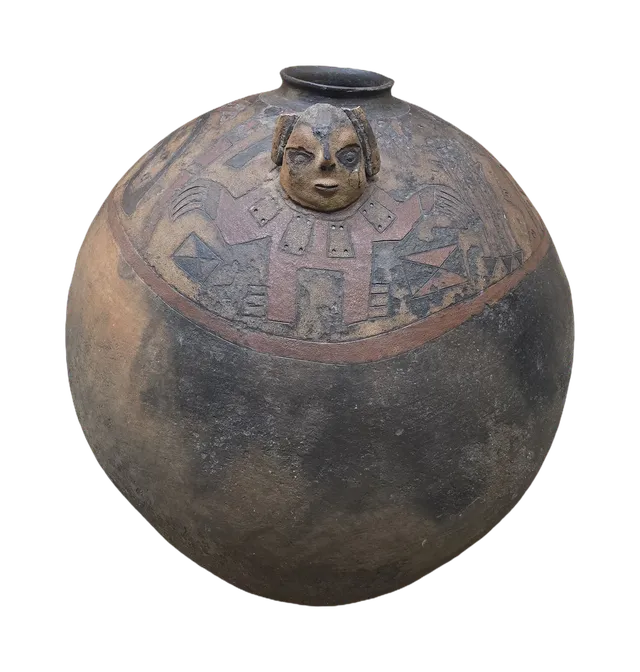
Much Mixtec pottery is polychrome, painted in red, black, orange and white. The best-known style is called Mixteca-Puebla, a shared artistic tradition of the centuries after about 900 CE that takes in Oaxaca, Puebla and neighbouring regions. Its designs include interlocking scrolls, geometric panels, birds, serpents and figures that look like scenes from the painted books. Vessels include pitchers, tripod jars, bowls and flat platters. The name describes a style, not a single workshop, and not every Mixteca-Puebla pot was made by a Mixtec potter.
Mixtec artists also made turquoise mosaic, setting small pieces of stone and shell into a surface. The sources of Mesoamerican turquoise have been debated; isotopic work published in 2018 argued that much of the turquoise used by the Aztec and Mixtec came from Mesoamerican deposits rather than the American Southwest. Modern copies and "Mixtec-style" labels are common. Style, material and condition need to agree before an attribution is strong. What is pre-Columbian art sets out the wider field, and is my pottery real explains the limits of a visual check.
If you have a piece you think may be Mixtec, photographs of the whole object, the base, the joins and any repairs are the best start. We buy single pieces and whole collections; we do not sell. Tell us about your piece for a first opinion. We reply within two working days, with an offer in writing where we can make one, and there is no fee and no obligation.
Further reading
- Jansen, Maarten, and Gabina Aurora Pérez Jiménez. The Mixtec Pictorial Manuscripts: Time, Agency and Memory in Ancient Mexico. Brill, 2010.
- Boone, Elizabeth Hill. Stories in Red and Black: Pictorial Histories of the Aztecs and Mixtecs. University of Texas Press, 2000.
- Nicholson, H. B., and Eloise Quiñones Keber, eds. Mixteca-Puebla: Discoveries and Research in Mesoamerican Art and Archaeology. Labyrinthos, 1994.
- Pohl, John M. D. The Politics of Symbolism in the Mixtec Codices. Vanderbilt University, 1994.
- Spores, Ronald. The Mixtecs in Ancient and Colonial Times. University of Oklahoma Press, 1984.
Cite this guide: Precolumbian.com, “Mixtec Art: Gold Jewelry, Codices and Pottery”, 2026, https://precolumbian.com/guides/mixtec-art-and-gold.html
Common questions
What is Mixtec art known for?
Mixtec art is known for cast gold jewelry, painted screenfold books, polychrome pottery and turquoise mosaic. The Mixtec also worked greenstone, turquoise, shell and other materials. Their codices record genealogies and histories of royal houses, and their goldwork is among the finest in ancient Mexico.
What is Mixtec gold jewelry?
Mixtec gold jewelry includes pendants, necklaces, ear ornaments, rings and bells, made by lost-wax casting and by working sheet gold. Some pieces add false filigree, where wax threads were cast in one piece with the ornament, or combine gold with silver and copper. Gold was used mainly for elite dress and offerings.
What is the Codex Zouche-Nuttall?
It is a Mixtec screenfold manuscript in the British Museum, painted on animal hide and folded like a concertina. It records genealogies and the career of Lord 8 Deer, among other histories. The 1987 facsimile describes 96 folded pages and a length of 11.22 metres.
Are Mixtec and Zapotec the same?
No. They are different peoples with different languages and political histories, although both lived in and around Oaxaca and interacted closely. Monte Albán is a Zapotec site, and Tomb 7 there is a Zapotec tomb that Mixtec nobles later reused. The names are not interchangeable.
What is Mixteca-Puebla pottery?
Mixteca-Puebla is a name for a shared polychrome style of the centuries after about 900 CE in Oaxaca, Puebla and neighbouring regions. It includes scrolls, geometric panels, birds and codex-like figures. The name describes a style, not a single workshop or one ethnic group.
What happened in Tomb 7 at Monte Albán?
Alfonso Caso found the tomb's offerings in 1932. It was a Zapotec tomb that Mixtec nobles reused, and it held gold, silver and other materials. The finds are in the Museum of the Cultures of Oaxaca and are a key source for Mixtec goldwork.
How can you tell a Mixtec piece from a modern copy?
There is no single test. Consider the material, style, construction, surface, wear and repairs, and compare the piece with published Mixtec work. A Mixtec-style motif or a shiny gold surface does not prove age, and a specialist examination is different from a checklist.
Keep reading
Ancient Zapotec pottery: gray ware, figures and effigy urns
Understand effigy urns and ancestor imagery, and tell ancient gray ware from modern Oaxaca black pottery.
Pre-Columbian gold and tumbaga: alloys, casting and value
Why a golden surface, an alloy recipe and an ancient attribution are different questions.
Pre-Columbian jade: beads, pendants, figures and masks
Separate jadeite from greenstone, and a stone's identity from the age and origin of its carving.
Pre-Columbian art museum guide: where to see the great collections
Museums in Mexico, Peru, Colombia, Costa Rica, the United States and Europe, what each holds, and three maps.
Pre-Columbian history timeline: art, cultures and dates
An approximate chronology that keeps overlapping cultures and different regional period names distinct.
Have something to sell?
Send us photographs and whatever you know. You hear back within two working days.
Or write straight to info@precolumbian.com